



The Invisible Cold Energy Core: How Brine Block Ice Machines Underpin Industrial Ice Supply
27 - 1 - 2026
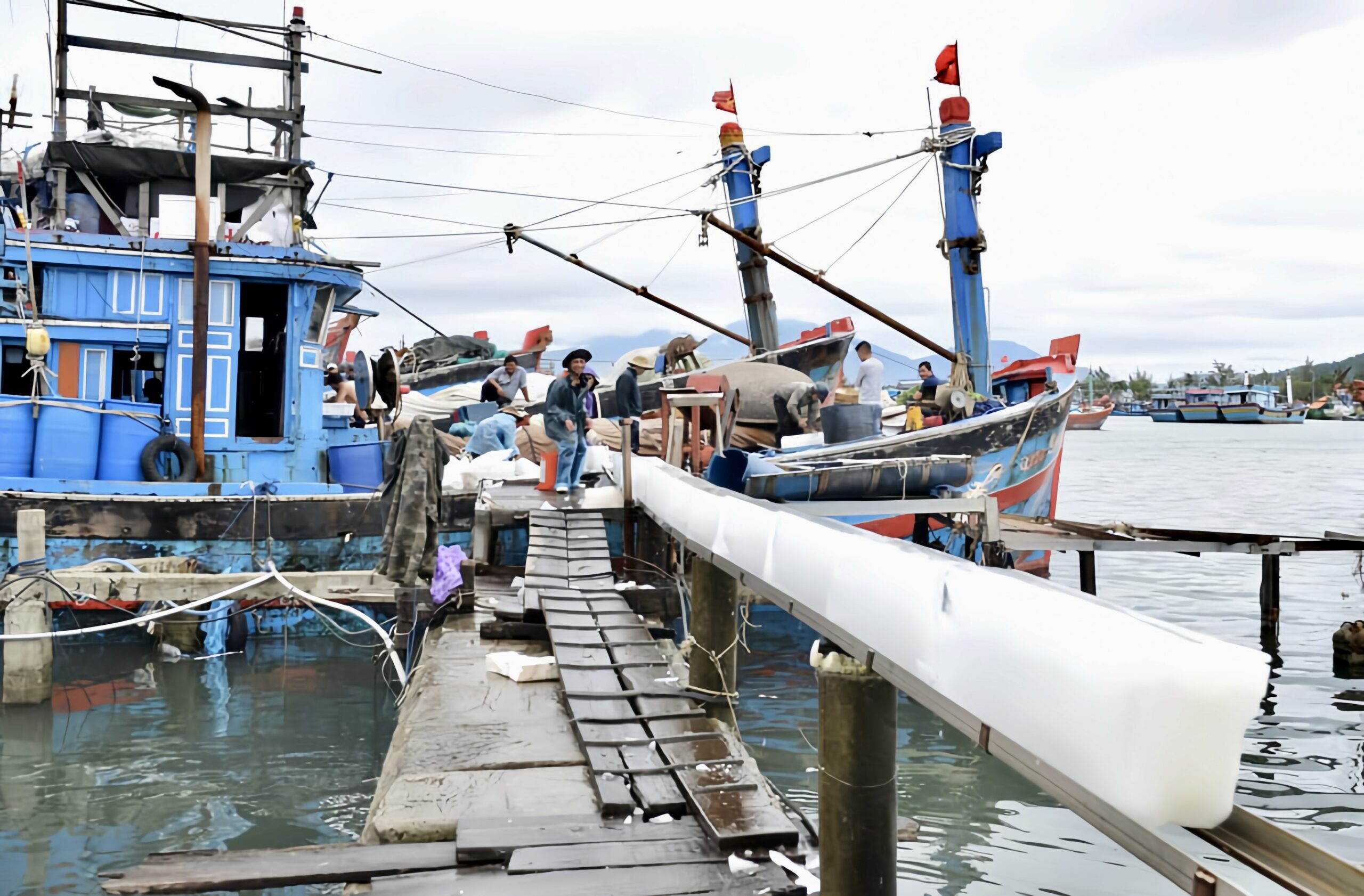
At dawn in the deep-sea port, freshly landed catches are swiftly covered in block ice to preserve their quality; at midday in chemical workshops, high-temperature materials rely on continuous ice supply to maintain safe temperatures; Within long-haul refrigerated containers, produce retains its freshness and texture in sub-zero conditions. In these scenarios, while the cooling effect of ice is evident, the unseen ‘invisible core’ behind the stable cold energy output remains overlooked: the brine block ice machine. Operating discreetly beneath the surface, it employs a unique indirect refrigeration logic to become an indispensable energy hub in large-scale ice applications, underpinning the entire industry's cold energy supply
I. The Invisible Logic: The Wisdom of Brine Block Ice Machine's Cold Energy Transfer
The ‘invisibility’ of the brine block ice machine lies not only in its frequent concealment in workshop corners or ice factories, but also in the ‘indirectness’ of its core ice-making logic—it avoids direct contact between refrigerant and water, instead using brine as a medium to build a cold energy transfer bridge. This achieves efficient ice production while safeguarding both the purity of the ice and the durability of the equipment.
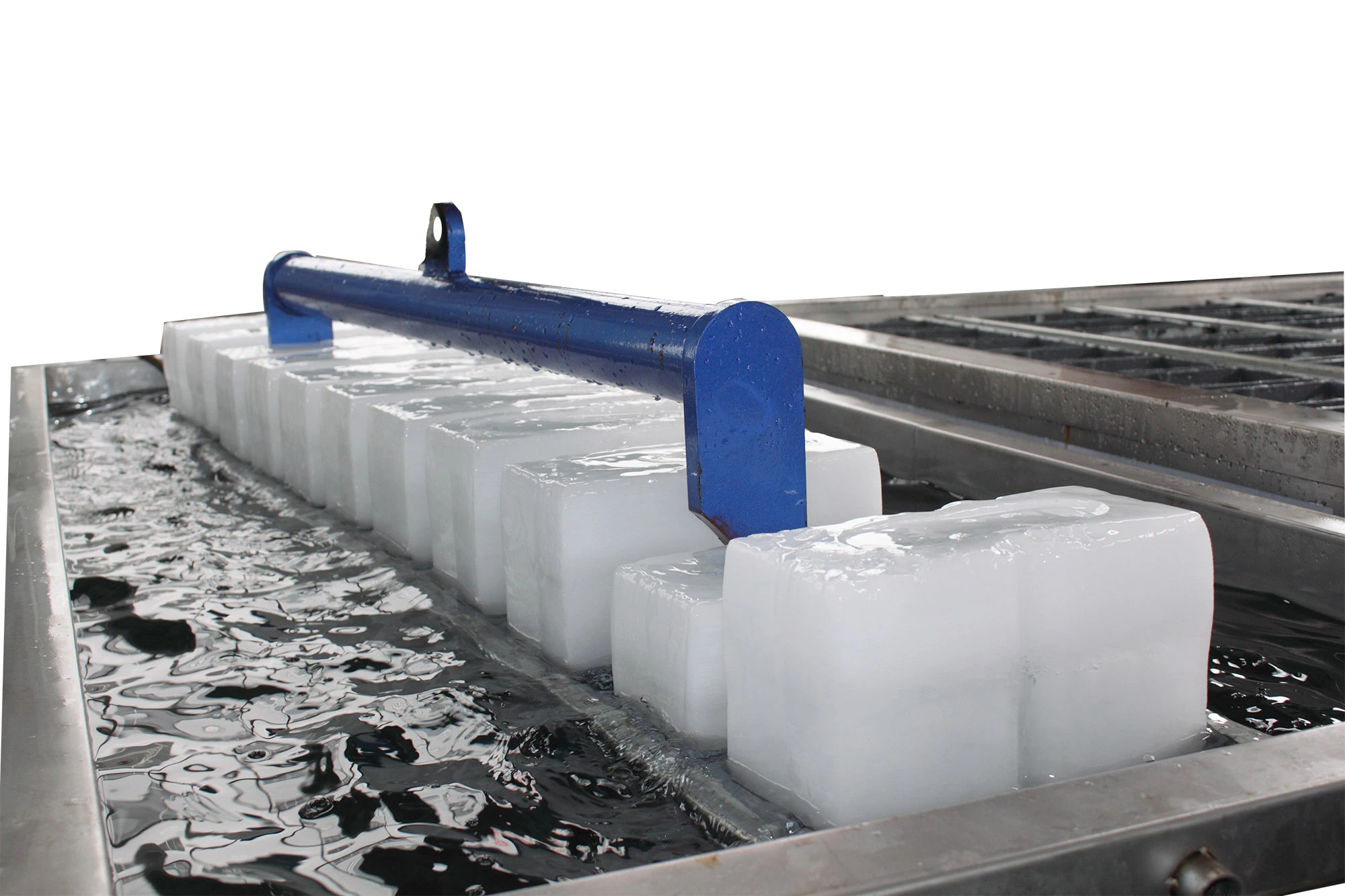
This cold energy transfer system is both streamlined and precise, showcasing ingenious industrial design throughout: a water-filled ice bucket is placed within a specially designed brine tank. Upon activation of the refrigeration unit, the brine undergoes rapid thermal exchange with the evaporator through agitation and circulation, causing its temperature to plummet below freezing point. At this stage, the chilled brine acts as countless “cold energy messengers”, uniformly enveloping each ice bucket to achieve comprehensive heat exchange. This allows the water inside to freeze slowly and evenly into high-density block ice. Upon completion, the ice buckets are transferred to a thawing pool where warm water gently melts the ice surface for demoulding. The thawed water is then recycled for subsequent ice-making cycles, forming a closed-loop system that maximises both cold energy and water resource efficiency.
This indirect ice-making method elevates the brine block ice machine beyond a mere ‘ice-making device,’ transforming it into an ‘invisible hub’ for efficient cold energy distribution. It not only enhances ice hardness by 40% and slows melting rates by over 30% compared to conventional ice but also eliminates the risk of secondary contamination from refrigerant-water contact, balancing practicality with safety.
II. Hidden Advantages: Comprehensive Empowerment from Cost to Durability
The core competitiveness of brine block ice machines lies in their subtle yet pivotal details. By addressing fundamental industrial ice challenges through ‘invisible advantages,’ they achieve multi-dimensional breakthroughs in production capacity, energy consumption, and durability, emerging as enterprises' secret weapon for cost reduction and efficiency enhancement.
1. Maximising Cold Energy Utilisation for Invisible Energy Savings
Energy consumption constitutes a primary cost in industrial ice production. Brine block ice machines achieve efficient cold energy reuse through circular design:
- Recycled low-temperature water from the ice-melting pool reduces water usage by over 30% while shortening the cooling cycle for subsequent ice production; Optimised compressor operation logic and brine circulation systems elevate the Coefficient of Performance (COP) by 5%-9%, significantly reducing daily electricity consumption compared to conventional ice makers. This achieves ‘invisible reductions’ in energy costs without compromising production output.
2. Hidden Corrosion-Resistant Structure: Invisible Durability Enhancement
The corrosive nature of brine is a widely recognised industry challenge. Premium brine block ice machines achieve ‘invisible corrosion resistance’ through material upgrades: brine tanks are fabricated from high-grade steel welded and treated with multi-layer rustproofing; evaporators utilise aluminium-bronze or titanium tubing, balancing efficient heat exchange with corrosion and wear resistance; critical components incorporate SUS304 stainless steel assemblies, defending against brine erosion at its source. This concealed structural design extends equipment lifespan by over 50% compared to standard units under harsh conditions of high temperature, humidity, and brine immersion, reducing downtime and maintenance costs.
3. Flexible Capacity Adaptation, Invisible Scenario Coverage
From compact ice stations producing 1 tonne daily to large-scale ice plants generating 200 tonnes per day; from standard 5kg block ice to custom 100kg specifications, brine block ice machines achieve ‘invisible adaptation’ through modular design. Compact units feature integrated designs to save space, while larger units employ split configurations for easy installation and relocation. Containerised designs enable plug-and-play deployment, reducing installation cycles by 60%. Whether in fixed ice plants, mobile docks, specialised ice sculpture exhibitions, or outdoor cooling projects, these units seamlessly integrate into diverse production workflows.

III. Invisible Empowerment: The Cold Energy Foundation Penetrating All Industries
The ‘invisible cold energy’ of brine block ice machines has long permeated the production processes of diverse sectors, serving as a core foundation for efficiency and quality assurance—though often obscured by the dominant demands of specific applications.
Within the seafood cold chain, it acts as an invisible inhibitor of freshness loss. High-density block ice maintains temperatures between 0-4°C for extended periods, suppressing bacterial growth in catches. This reduces long-distance transport wastage from 15% to below 5%, ensuring seafood and produce retain their freshness from dock to dining table. This underpins the global circulation of aquatic products.
In industrial cooling applications, it serves as the ‘invisible guardian’ of production stability. In scenarios such as chemical manufacturing and concrete mixing, block ice's slow melting rate and broad cooling coverage enable precise temperature control within safe parameters. This prevents equipment overheating or material degradation, ensuring uninterrupted 24-hour production and safeguarding industrial output.
In specialised applications, it serves as an ‘invisible solution provider’ for diverse needs. For ice sculpture exhibitions, custom-sized oversized blocks combine practicality with aesthetic appeal; in food processing, crushed block ice flexibly meets temporary cooling demands; during outdoor project cooling, mobile ice stations deploy rapidly, delivering stable cold energy for unexpected requirements.

IV. Conclusion: Selecting the Invisible Core, Fortifying Competitive Confidence
For enterprises pursuing stable output and cost control, the ‘invisibility’ of brine block ice machines precisely embodies their core value—requiring minimal maintenance attention, avoiding resource wastage, yet delivering consistent, reliable cooling capacity. This makes them the ‘worry-free’ foundation of production operations. At its core lies indirect refrigeration technology, underpinned by corrosion resistance, durability, energy efficiency, and versatile adaptability. It delivers precise cooling to every required scenario, establishing itself as the ‘invisible champion’ in industrial ice applications.
Selecting a premium brine block ice machine fundamentally means establishing a reliable cooling core for your enterprise. It reduces costs and enhances efficiency through unseen details, enabling your business to gain a firm foothold in industry competition through this invisible advantage.
Frequently Asked Questions (FAQs)
Q1: What is a brine block ice machine?
A brine block ice machine produces high-density block ice using an indirect refrigeration system. It freezes water inside ice moulds immersed in chilled brine, ensuring efficient heat transfer, ice purity, and long equipment life.
Q2: Why does brine ice making produce harder ice?
Because the water freezes slowly and evenly in a controlled brine environment, the resulting block ice has higher density, greater hardness, and a slower melting rate compared to direct-contact ice-making methods.
Q3: Is brine block ice safe for food and seafood applications?
Yes. The refrigerant never comes into direct contact with the water used to make ice. This indirect system eliminates contamination risks, making it suitable for food processing, seafood preservation, and cold-chain logistics.
Conclusion: Find Your Best Cooling Solution.
Discover how this ‘invisible cooling core’ can be tailored to your industry? Click now for a bespoke solution, including complimentary installation guidance and a one-year warranty, empowering your production with brine block ice technology.




 Location