



Outstanding Tube Ice Machines for African Ice Factories: 2026 Investment & Profit Analysis
11 - 3 - 2026
Starting an ice factory in Africa has unique challenges. Power supply is not reliable. Ambient temperatures are high. People need hygienic ice for fish preservation and beverage cooling. These factors can decide your business success. You need equipment that produces ice and delivers profits and survives tough conditions. This article reviews the best tube ice machine solutions for African entrepreneurs. We analyze real investment costs, profit potential, and why Focusun Refrigeration is the chosen partner for ice factories from Lagos to Mombasa.
Why Ice Factories Fail in Africa—And How to Avoid It
The African ice market is growing fast. Temperatures are high. Food safety rules are getting stricter. The demand for clean, edible tube ice has never been higher. Fish processing plants need ice within hours after catch to stop spoilage. Beverage distributors need steady cooling. However many ice factories still fail. First equipment that cannot handle local conditions. Second underestimating operating costs. Third poor ice quality. The right tube ice plant solves all three problems. But selection matters.
Tube Ice Machines: Pros and Cons for African Operations
| Pros | Cons |
| Food-grade safety certification– Meets international HACCP/FDA standards. This is essential for fish export to EU markets. | Higher initial investment than cheap local alternatives. |
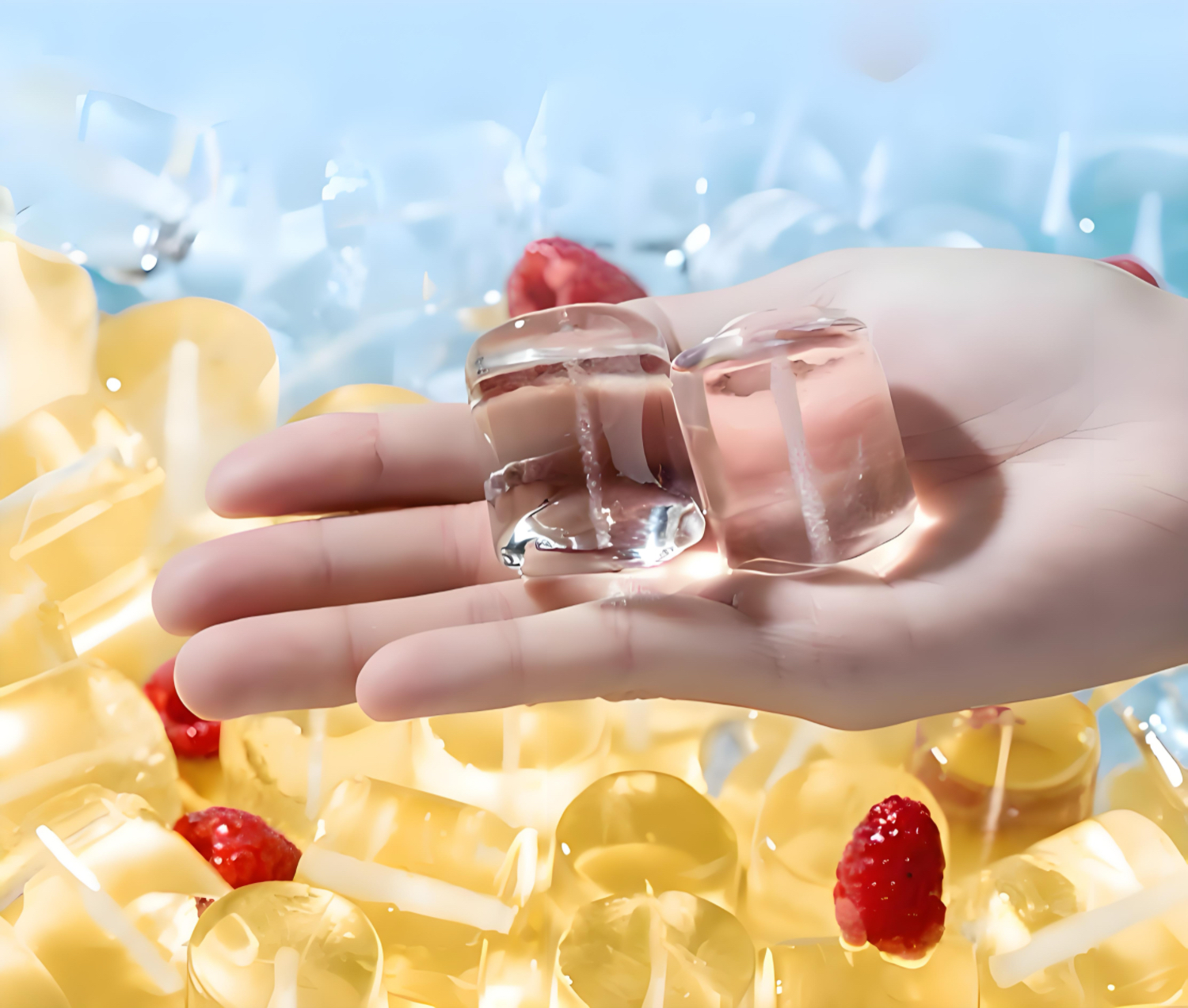
| Slow melting rate– Hollow tube shape provides longer cooling. This is critical for fish preservation in hot climates. | Requires clean water– Needs filtration system. This is an additional investment. |
| High density & hardness– Less breakage during transport. Lower product loss. | Professional installation needed– Must be done by qualified technicians. |
| Energy-efficient operation– Modern compressors like Bitzer reduce electricity costs over time. | Spare parts lead time– Importing parts can take weeks without local stock. |
| Scalable production– From 1 ton to 30+ tons per day. | Power dependency– Requires stable electricity or generator investment. |
| Automated operation– Reduces labor costs. 1-2 operators per shift is enough. | Water consumption– About 1.1m³ water per ton of ice produced. |
Focusun Tube Ice Machines: Built for African Conditions
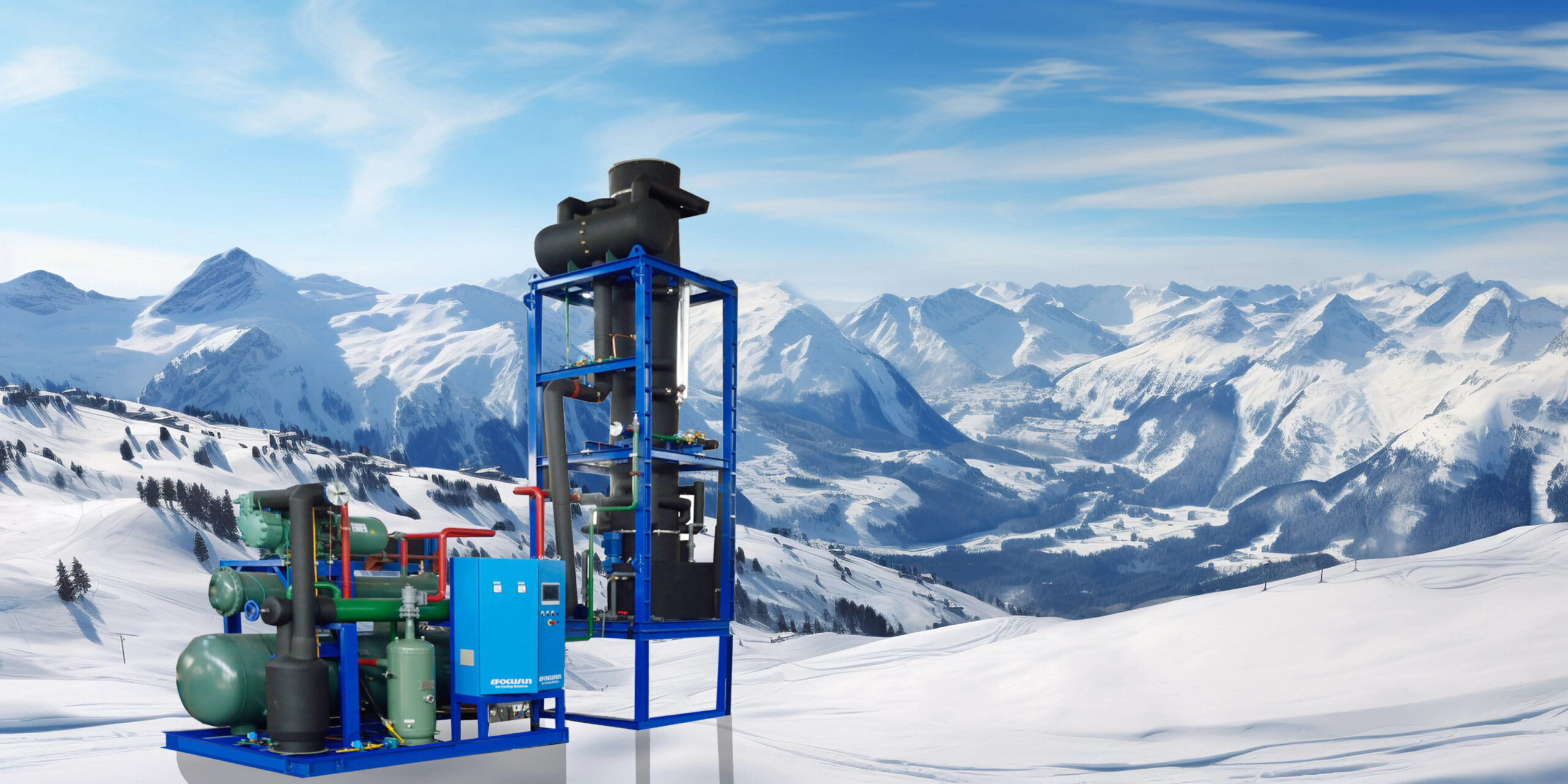
Small-Scale Entry: 1 Ton/Day Tube Ice Machine (FIT-10)
This unit produces 1000 kg daily of food-grade tube ice. It supplies local fishmongers, small bars, or a few restaurants. It has a Bitzer compressor. Power consumption is 4.74kW total running power. Ice size options are 22mm, 28mm, or 35mm diameter. It uses SUS304 stainless steel evaporator with a 20-year warranty against deformation. The machine has automated PLC controls. Even first-time operators can manage production with minimal training.
Medium-Scale Workhorse: 5-10 Ton/Day Options
For fish landing sites or regional beverage distributors, medium machines offer the best return. A 5 ton/day plant needs 25-30 HP total power. It can generate $12,000+ monthly revenue at full capacity. These units have Bitzer compressors as standard. PLC touchscreen control gives full automation and remote monitoring. Dual cooling options are available. Air-cooled works for water-scarce areas. Water-cooled gives maximum efficiency. Modular design ships in container-sized modules for easy transport.
Large-Scale Industrial: 30 Ton/Day Tube Ice Plant (FIT-300)
For multiple fish factories or major city markets, the FIT-300 produces 30,000 kg daily. This fills over 7,000 bags of 4kg ice every day. It has three Bitzer compressors. Total cooling is 222.9kW. Running power is 105kW. Cooling is water-cooled with cooling tower included. The evaporator uses special treated alloy materials for maximum heat transfer. Hot gas defrost technology gives clean, automatic harvesting. All water-contact surfaces meet strict food-grade standards.
Why Focusun Components Matter
Bitzer compressors are world-famous for reliability in high-ambient conditions. The stainless steel evaporator uses Focusun's 19-step manufacturing process. This ensures the ice mold will not deform or crack for 20 years. PLC control system has Siemens components with an easy-to-use interface. It monitors freeze time and defrost cycles. It alerts operators before issues become breakdowns.
Frequently Asked Questions
Q1: Is the ice business profitable in Africa? How much can I earn?
A1: Yes. Profit margins of 40-60% are possible. A 10 ton/day plant can generate $50,000+ monthly revenue at full capacity. Actual profit depends on local competition, electricity costs, and your distribution network. Fish processing clients offer steady demand but may ask for volume discounts. Retail bag sales (4kg bags at $0.80-1.20) give the highest margins.
Q2: Why choose Focusun over cheaper Asian brands?
A2: Three reasons. Reliability– Bitzer compressors and stainless steel construction handle African conditions without constant breakdowns. Efficiency– Lower electricity consumption saves thousands every year. Ice quality– Food-grade certification means your ice meets export standards. This opens premium markets.
Conclusion: Build Your Ice Business on Solid Foundations
In the African ice market, your equipment choice decides everything. Cheap machines fail when temperatures rise and power fluctuates. Production stops. Customers leave. Profits disappear.
Focusun Refrigeration brings over ten years of industrial refrigeration experience to your project. From the compact 1-ton FIT-10 to the industrial 30-ton FIT-300, every machine shares the same qualities. They have German-inspired engineering, food-grade materials, and energy-efficient operation. We have helped ice factory owners from Lagos to Nairobi build profitable, sustainable businesses.
Ready to calculate your exact investment? Contact Focusun today for a custom feasibility study. We will study your local market. We will recommend the right capacity. We will give a turnkey quote covering machine, installation, and training. Your ice factory success starts here.




 Location