



What Is An Ice Compactor For Food Service Industry And Why Does It Improve Ice-making Efficiency?
19 - 1 - 2026
In the kitchens of large chain restaurants, high-end hotel banquets, central kitchens, and beverage processing plants, efficiently and consistently obtaining large quantities of standardized ice blocks is crucial for ensuring food service speed, beverage quality, and smooth operations. Traditional ice-making methods often face problems such as long ice-making cycles, limited ice block sizes, or large footprints and high procurement costs for commercial block ice machines. Especially when dealing with peak banquet seasons or sudden surges in demand, how to quickly and flexibly obtain large quantities of "ready-to-use" block ice becomes a real operational bottleneck. Ice compactors, as innovative secondary ice-forming equipment, are providing the catering industry with a new ice source solution due to their unique modularity and high efficiency.
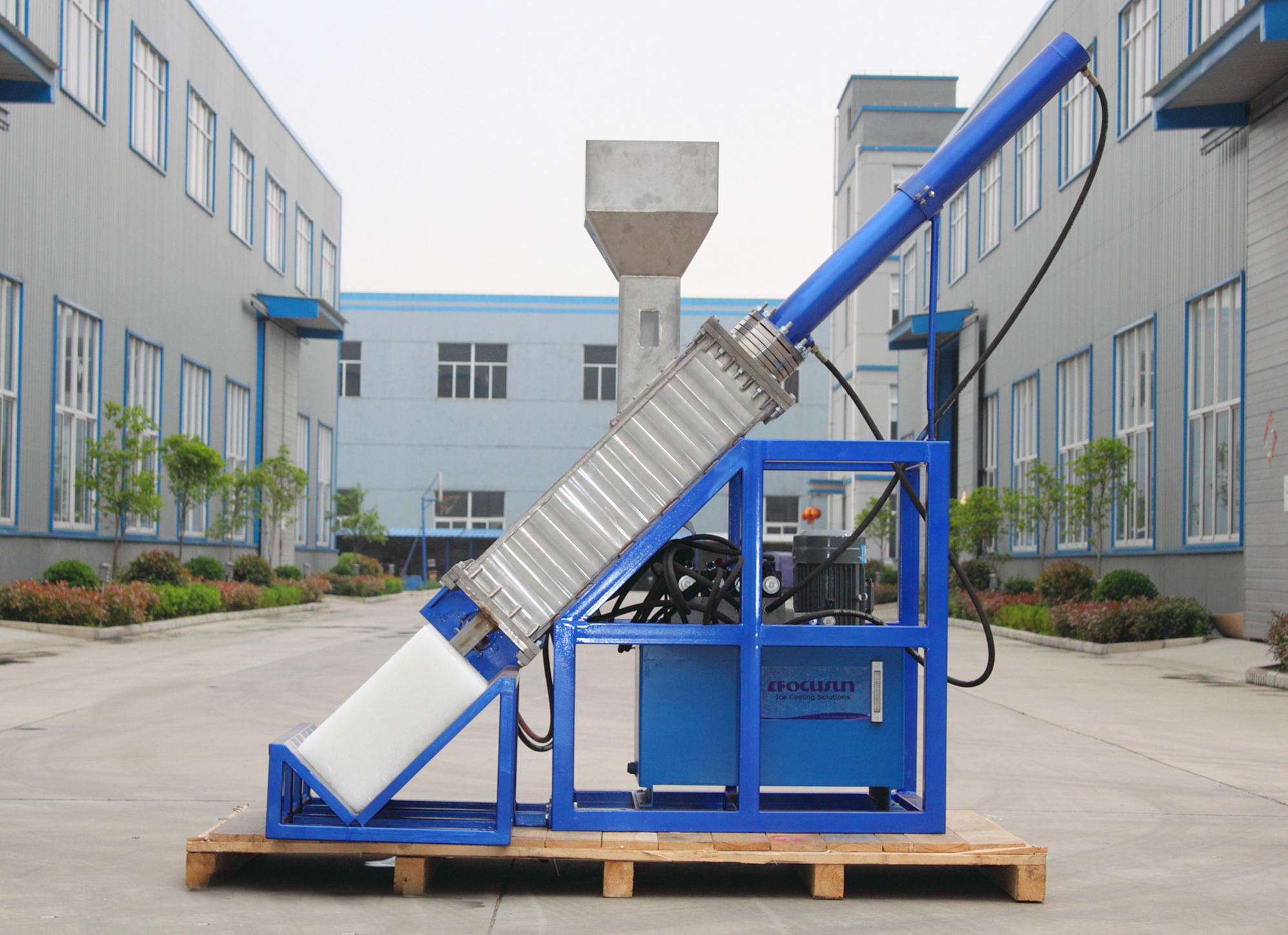
What Is An Ice Compactor?
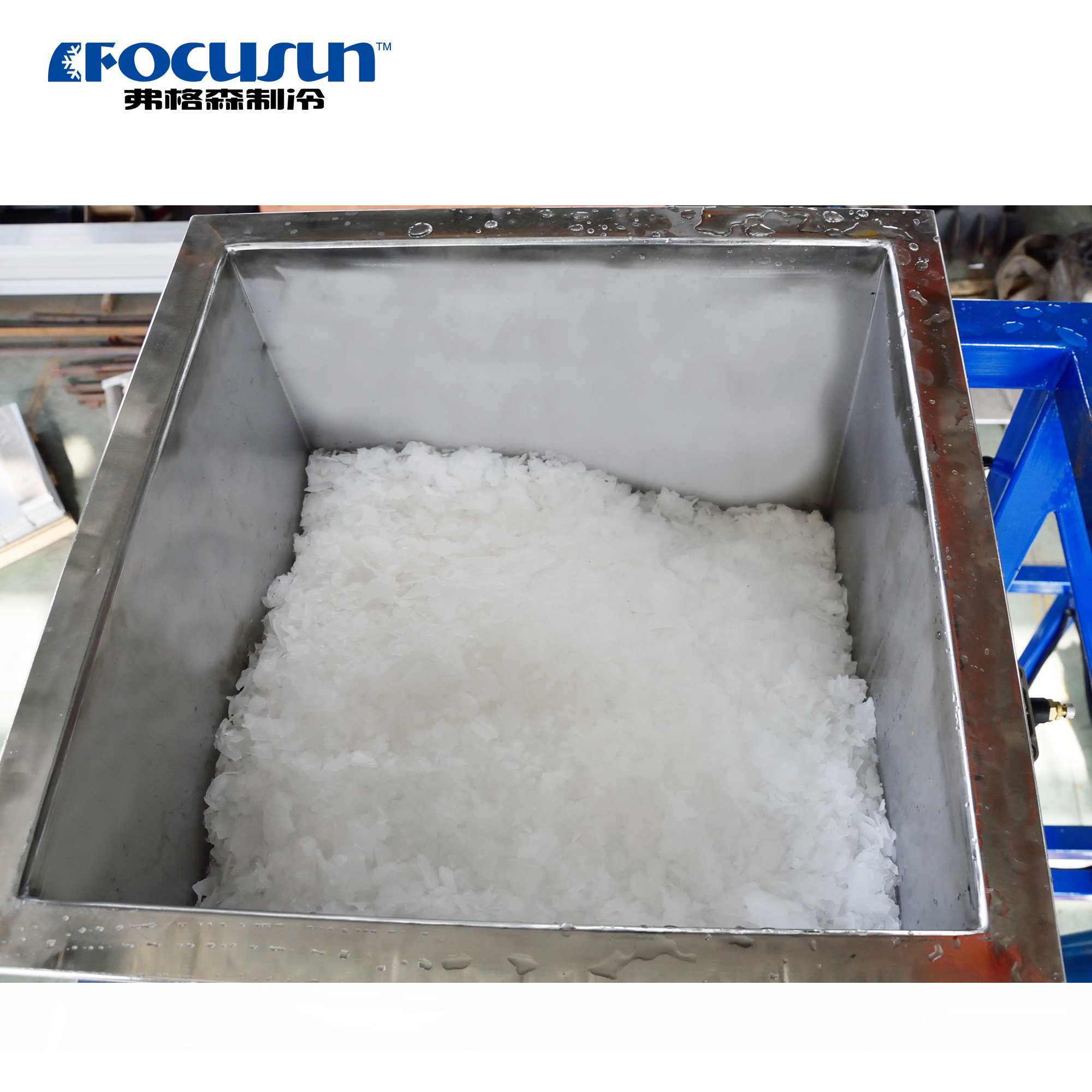
An ice compactor is not an "ice maker" in the traditional sense, but rather a molding device that compresses loose flake ice or tubular ice under high pressure, shaping it into dense, solid block ice. Its core function is to powerfully extend existing ice-making systems, transforming continuously produced small ice crystals into larger blocks of ice that are easy to handle, store, and use. Taking the Focusun commercial ice compactor as an example, its workflow resembles a precise "ice mold": the user fills its hopper with loose ice crystals produced by a front-end flake ice machine or tube ice machine. The equipment then activates its hydraulic system, driving a heavy-duty press head to compress the ice crystals under high pressure within the forming chamber. During this process, air between the ice crystals is forcefully expelled, and the ice crystals themselves partially melt and re-condense under high pressure, ultimately forming a dense, hard, and standard-sized solid ice block (common sizes range from 10 kg to 50 kg).
Composition of An Ice Compactor
- Power and Compaction System: Utilizing a high-quality hydraulic cylinder as the power core, it provides strong and continuous pressure, ensuring uniform density and strength of each pressed ice block. Its durable design guarantees continuous operation for over 150,000 cycles, meeting the high-intensity demands of commercial operations.
- Integrated Structural System: The entire machine adopts a modular design and a full 304 food-grade stainless steel body, resulting in a compact structure, small footprint, easy layout in the kitchen, and easy cleaning and maintenance, fully meeting the stringent hygiene standards of the catering industry.
- Automated Control System: The built-in intelligent control system automates the entire process from feeding, compaction, discharging to automatic ice block delivery. Operation is simple, with one-button start, requiring no dedicated personnel, greatly freeing up kitchen manpower.
Ice Compactor Machine VS Large Block Ice Machine: Why is it More Suitable for the Catering Industry?
The value of the ice compactor machine lies in its creative solution to the core pain point of the catering industry in "the scaling and standardization of ice."
1. Efficiency Dimension: Achieving Instant Response for "On-Demand Production"
Traditional large block ice machines have long ice-making cycles, and if there is insufficient ice preparation for the day, they will face the predicament of having no ice available. The ice press machine, in conjunction with the high-efficiency flake/tube ice machine at the front end, forms a highly flexible system of "continuous ice making + instant molding." Flake ice machines can continuously produce loose ice 24/7 as a "semi-finished product" reserve. When large blocks of ice are needed, ice compactor machines can compress the reserve of loose ice into shape in a very short time. This model decouples ice making from ice usage, transforming "waiting for ice making" into "instant compression," perfectly handling the sudden surge in demand during peak periods such as banquets and group meals.
2. Space and Cost Dimensions: Achieving High-Value Equipment with Low Investment
For commercial kitchens with limited space, installing large industrial block ice machines is often impractical. The compact structure and small footprint of ice compactor machines are particularly advantageous. At the same time, the purchase and operating costs of front-end flake ice machines are typically lower than those of large block ice machines with equivalent capacity. This means that catering businesses can obtain a flexible ice source system capable of producing various sizes of block ice on demand with lower initial investment and less space occupation, significantly improving the return on investment.
3. Quality and Flexibility: Achieving Standardized Output for Multiple Uses
The ice compactor can produce ice blocks in various standard weights, including 10kg, 15kg, 20kg, 25kg, and 50kg, to meet different application scenarios: large blocks can be used for seafood tank preservation, ice sculpture displays at buffets, or chilling large ingredients; medium-sized blocks are easy to handle and suitable for bar mixing or bulk preparation in the kitchen. This adjustable specification and standardized output feature allows catering companies to manage ice sources uniformly and efficiently according to the needs of different departments (kitchen, bar, banquet), improving the professionalism and consistency of overall operations.
| Comparison Dimension | Ice Compactor | Traditional Large Block Ice Machine |
| 1. Production Mode & Response Efficiency | Flexible Production, Instant Response | Cyclical Production, Long Wait Times |
| 2. Space Requirement & Investment Cost | Compact & Flexible, Optimized Investment | Large & Fixed, Higher Cost |
| 3. Product Flexibility & Application Management | Multiple Specifications, On-Demand Customization | Single Specification, Fixed Application |
| 4. Core Operational Model Difference | Decoupled Ice Making and Forming | Integrated Continuous Production |
Common Questions About Ice Compactor
Q1.Does the ice compactor support customization?
Yes, we offer customization. Customers only need to confirm the type of ice blocks, the size of the compressed ice blocks, and the daily ice output required.
Q2.What are the specific application scenarios for this machine?
The ice compactor is suitable for many scenarios. For example:
- Large supermarkets and cold storage: as a supplementary or emergency cold source for refrigerated display cases and cold storage. 2. Construction: In large-scale engineering projects (such as hydropower dams and nuclear power plants), ice is added to the concrete mixing water to precisely control the concrete's pouring temperature and prevent temperature cracks.
- Aquaculture: Used for preserving fish caught at sea, transporting and temporarily holding seafood at wholesale markets, effectively maintaining the freshness and quality of catches.
- Agricultural Product Preservation and Meat Processing: Used for long-distance transportation and wholesale market storage of fruits, vegetables, and meats.
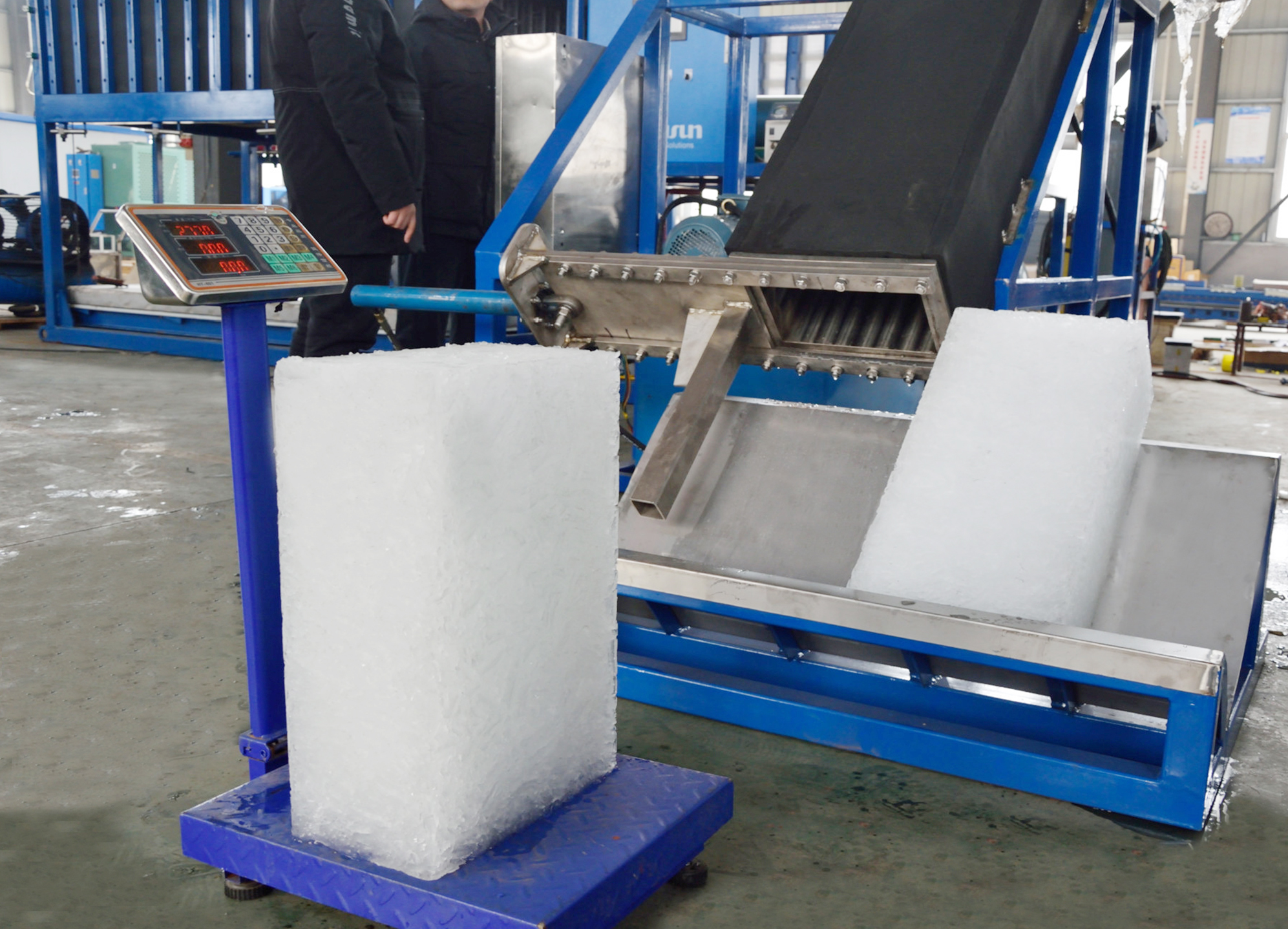
Conclusion:Choosing An Efficient and Safe Ice-making Solution for Catering Industry- Focusun Ice Compactor
For the catering industry, an ice compactor is far more than just an ice-making device. It represents a modern kitchen supply chain mindset that combines "continuous production" with "on-demand customization." It transforms ice from a "stock item" requiring long-term advance preparation and fixed specifications into a "service resource" that can be responded to instantly and flexibly customized. For modern catering enterprises pursuing operational efficiency, cost control, and quality stability, investing in an integrated ice handling system including an ice compactor means gaining strong flexibility and control in core logistical support. It not only solves the anxiety of ice shortages during peak periods, but also reduces reliance on manpower and operational complexity through standardization and automation.
Choosing a reliable commercial ice compactor supplier like Focusun ensures overall reliability, from equipment durability and food-grade safety to automated control, truly transforming this efficient technology into a solid support for enhancing the core competitiveness of catering businesses.




 Location